

The AI trade is moving beyond chips and cloud infrastructure. Google’s latest deal with Constellation Energy shows why electricity — and the companies capable of producing it reliably — could become one of the most important investment themes of the next decade.
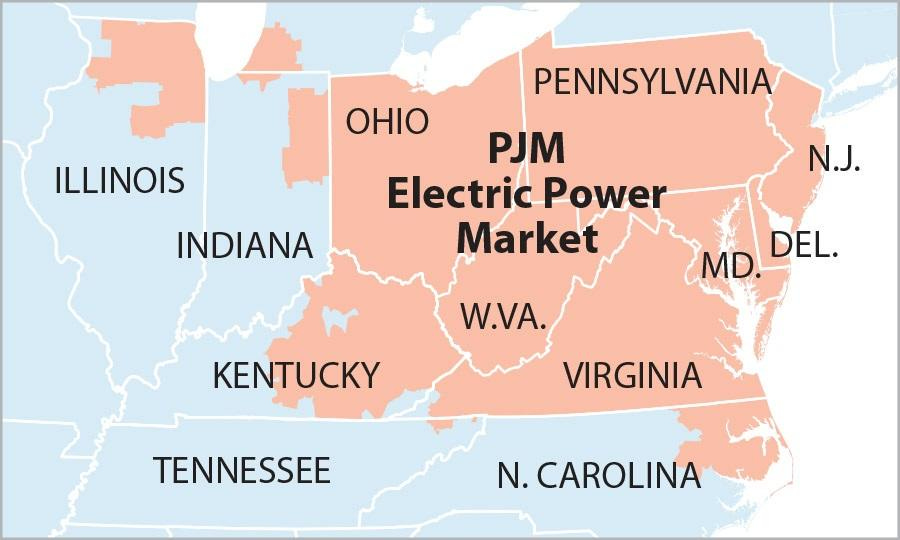
On October 6, Google and Constellation Energy announced a long-term power agreement covering 3,590 MW of electricity in the PJM market.
At first glance, it looks like another enormous corporate power purchase agreement.
I think investors should look at it differently.
The most interesting part of this deal is not simply that Google needs more electricity. We already know that. Data centers are consuming more power as AI workloads become larger and more demanding.
What matters is what Google is willing to do to secure that electricity.
The agreement includes a 20-year commitment for 890 MW of new nuclear capacity, while Constellation plans to invest more than $4.3 billion to upgrade 11 existing nuclear units across Illinois, Pennsylvania and New Jersey. The first additional capacity is expected to come online in 2028.
Subscribe for free to receive independent market analysis and practical investing insights.
There is also a separate 15-year agreement covering another 2,700 MW from Constellation’s existing PJM generation fleet.
So this is not a 3.59 GW new nuclear build. The 890 MW is the incremental nuclear capacity. The remaining 2,700 MW comes through a separate long-term power agreement.
That distinction matters.
Because the real story here is bigger than one nuclear contract.
AI is becoming an energy infrastructure story.
AI doesn’t run on GPUs alone
For the last few years, investors have been trained to think about the AI boom through a fairly narrow lens.
Nvidia sells the GPUs.
Broadcom provides networking and custom silicon.
Microsoft, Amazon and Google build the cloud infrastructure.
Then there are data-center operators, cooling systems, memory, storage and other pieces of the supply chain.
All of those businesses are important.
But eventually, every AI workload runs into the same physical constraint:
You need electricity.
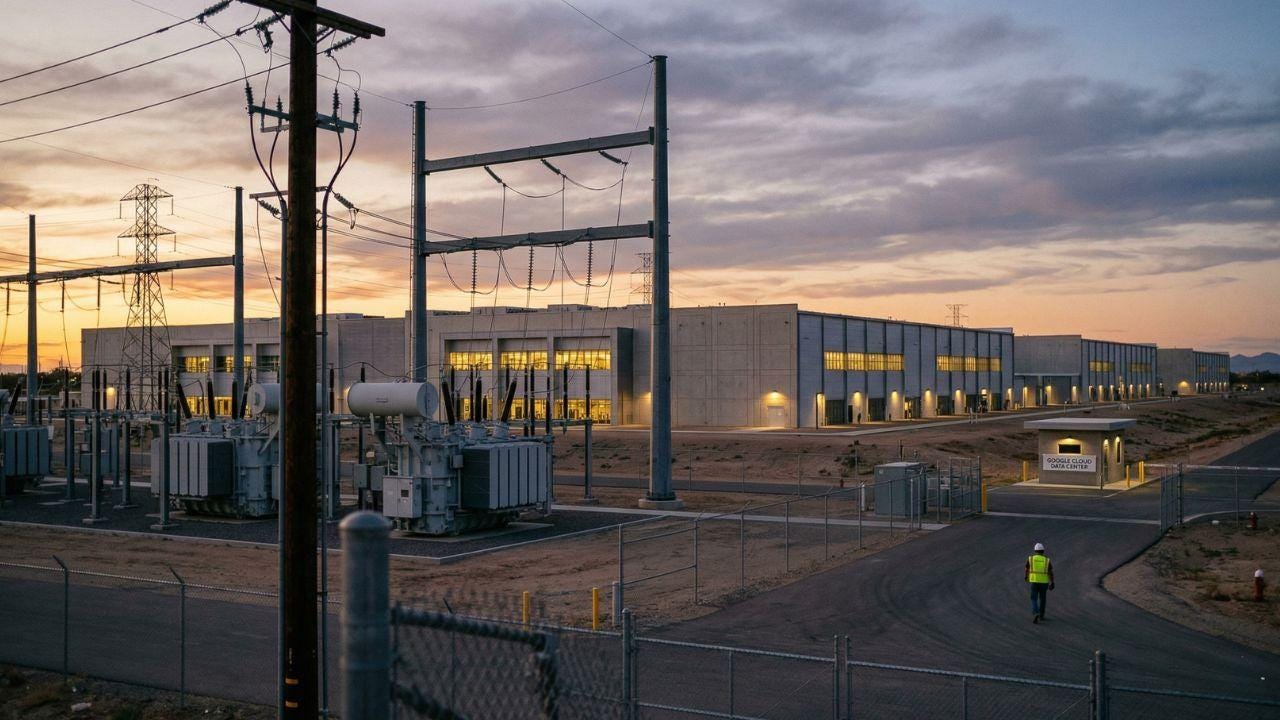
And unlike software, electricity cannot simply be scaled with another server rack.
A data center can be designed, financed and built relatively quickly compared with the infrastructure required to supply it with reliable power. Grid connections can take years. New generation takes time. Transmission infrastructure takes time. Nuclear plants take even longer if you are starting from scratch.
This is why I think the Google–Constellation agreement is more interesting than the headline number suggests.
Google is effectively securing a long-term supply of firm electricity at the same time that it continues investing heavily in AI infrastructure.
That tells us something about where the bottleneck may be moving.
The limiting factor for AI is no longer just compute.
Increasingly, it is power availability.
Why nuclear makes so much sense for data centers
There are plenty of ways to generate electricity.
The problem is that not all electricity is equally useful for a data center.
Solar and wind are important parts of the U.S. power mix, but their output depends on weather and time of day. Natural gas is flexible and dispatchable, but it comes with fuel-price exposure and emissions.
Nuclear is different.
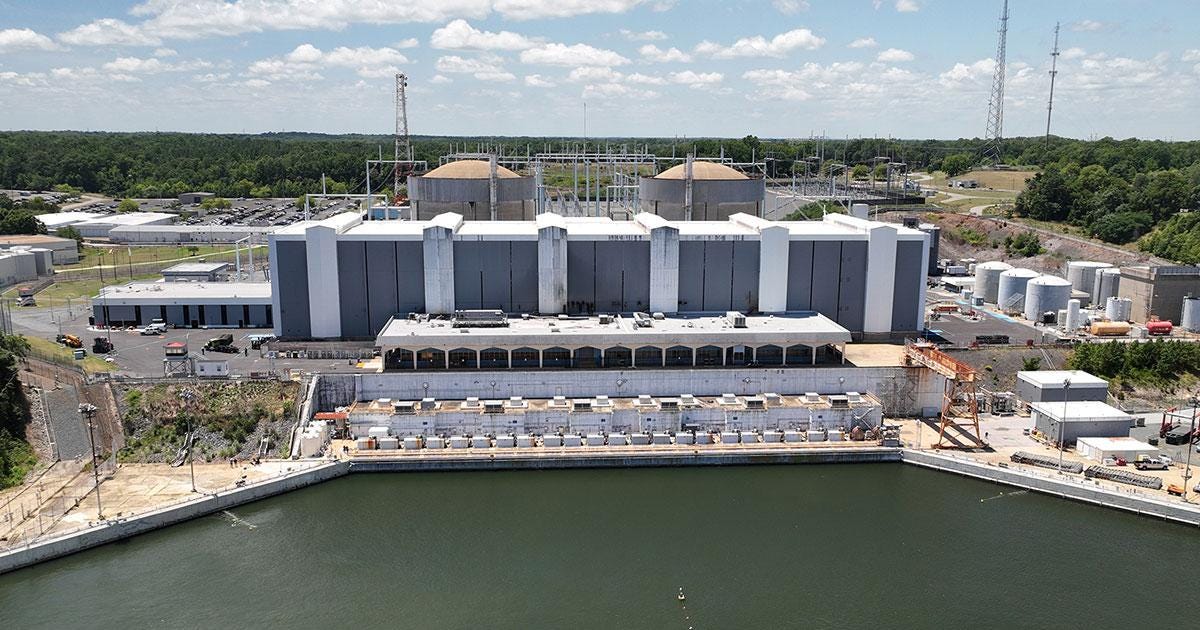
A nuclear plant can produce electricity continuously, around the clock, with very low operational emissions.
That combination is particularly attractive when the customer is operating a data center that cannot simply switch off because the sun is not shining or the wind has stopped.
Constellation describes its nuclear fleet as the largest in the United States, and its nuclear generation operates with a very high capacity factor. In Q2 2026, its operated nuclear plants achieved a 93% capacity factor excluding certain jointly owned facilities.
That reliability is becoming increasingly valuable.
And there is another interesting point about this particular deal.
Constellation is not building 11 new reactors.
It is upgrading reactors that already exist.
The company plans to invest more than $4.3 billion in equipment and technology upgrades designed to improve thermal and electrical efficiency and unlock an additional 890 MW of capacity.
That is a very different proposition from building a completely new nuclear fleet.
The infrastructure already exists.
The reactors already exist.
The grid connections already exist.
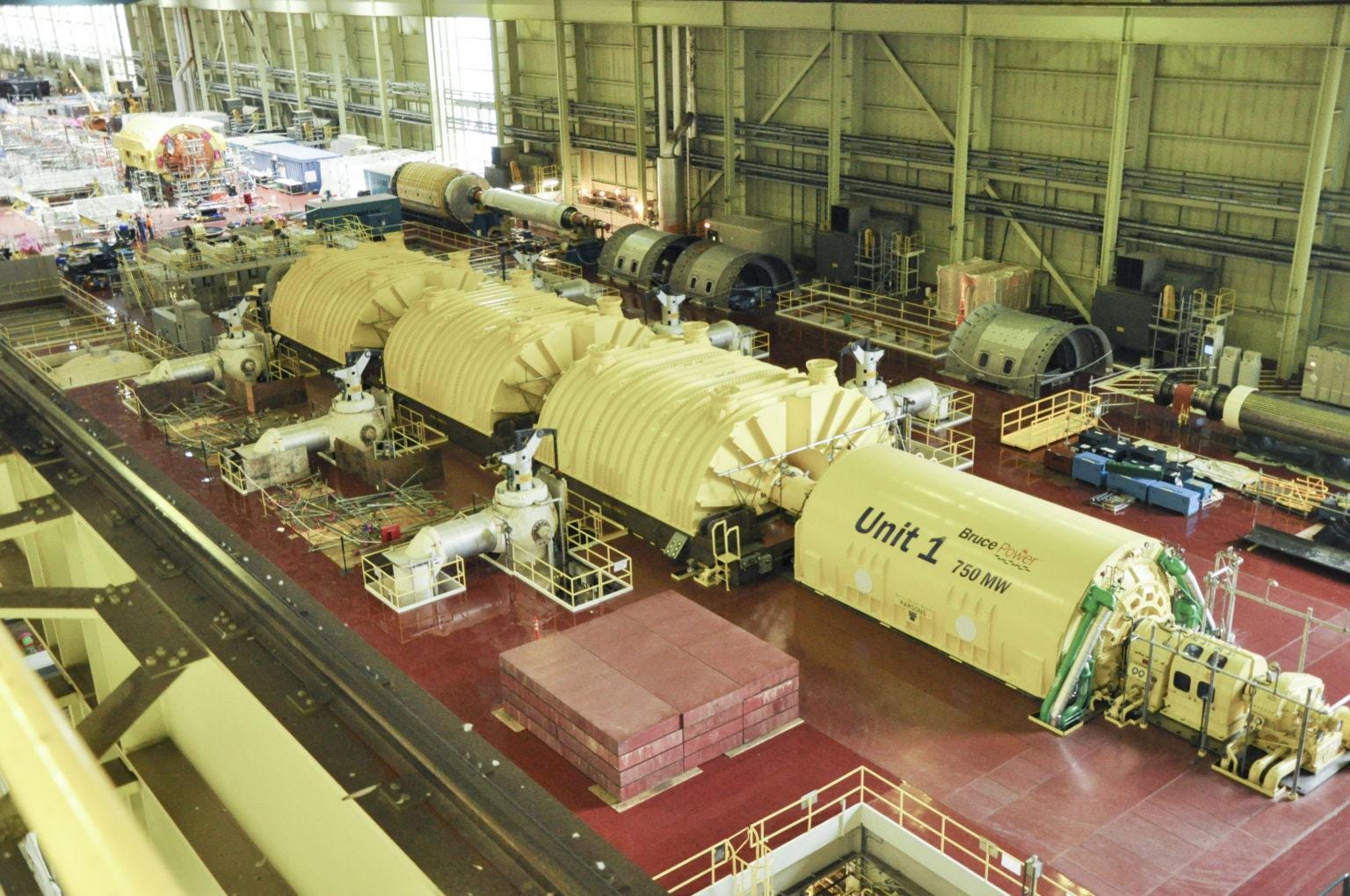
The opportunity is to extract more useful output from assets that are already operating.
For an investor, that is potentially a very attractive form of growth.
The $4.3 billion is only part of the story
The number that caught most of the headlines was the $4.3 billion investment.
But I don’t think investors should look at that figure in isolation.
The important question is what Constellation gets in return.
The investment is being supported by a 20-year power purchase agreement with Google. That kind of long-term customer commitment gives Constellation something extremely valuable in an energy business: visibility.
The company is effectively investing in existing infrastructure while securing a long-duration customer relationship for the additional output.
We don’t yet know the exact pricing economics of the agreement, and neither company disclosed the expected earnings contribution from the deal.
So I would not pretend that we can calculate the exact return on the $4.3 billion investment from the announcement alone.
We can’t.
But we can understand the strategic logic.
Constellation has an existing nuclear fleet.
Google needs reliable electricity.
Google has a very strong balance sheet and a long-term need for power.
Constellation has the assets and the expertise to provide it.
That is a pretty straightforward alignment of interests.
And importantly, this is not the first time Constellation has been moving toward long-term agreements with large corporate customers. In Q2 2026, the company announced another 920 MW of long-term PPAs for clean, reliable generation with investment-grade customers.
The business is gradually moving toward a model where its generation assets can become increasingly tied to long-duration customer demand.
That is something I would pay attention to.
Constellation is becoming an AI infrastructure company — without selling AI
This is where the story gets particularly interesting for investors.
Constellation does not make GPUs.
It does not operate a cloud platform.
It does not sell AI software.
And yet, AI growth could become one of the strongest demand drivers for its underlying product.
That makes CEG an interesting second-order AI investment.
The first-order AI companies are obvious.
Nvidia sells the compute.
Microsoft sells the cloud.
Google sells AI services.
The second-order beneficiaries are less obvious.
Companies providing electricity, cooling, networking, construction, transformers, transmission infrastructure and other physical inputs can benefit from the same capital-spending cycle.
This is not necessarily a better investment than buying the companies at the center of the AI boom.
But it gives investors another way to participate.
And I think this distinction is becoming increasingly important.
When everyone is looking at the same AI stocks, it can be useful to ask a simpler question:
What does the AI boom physically require?
The answer includes a lot more than semiconductors.
Google isn’t just buying electricity
There is another part of the agreement that I find particularly interesting.
Google and Constellation also announced plans to use Google Cloud and Gemini Enterprise to develop an “AI for Energy” framework aimed at improving grid operations, affordability and resiliency.
In other words, the relationship goes beyond Google simply being a customer.
Google wants more power.
Constellation wants to produce and deliver more power efficiently.
And both companies are looking at how AI itself can be used to improve the energy system.
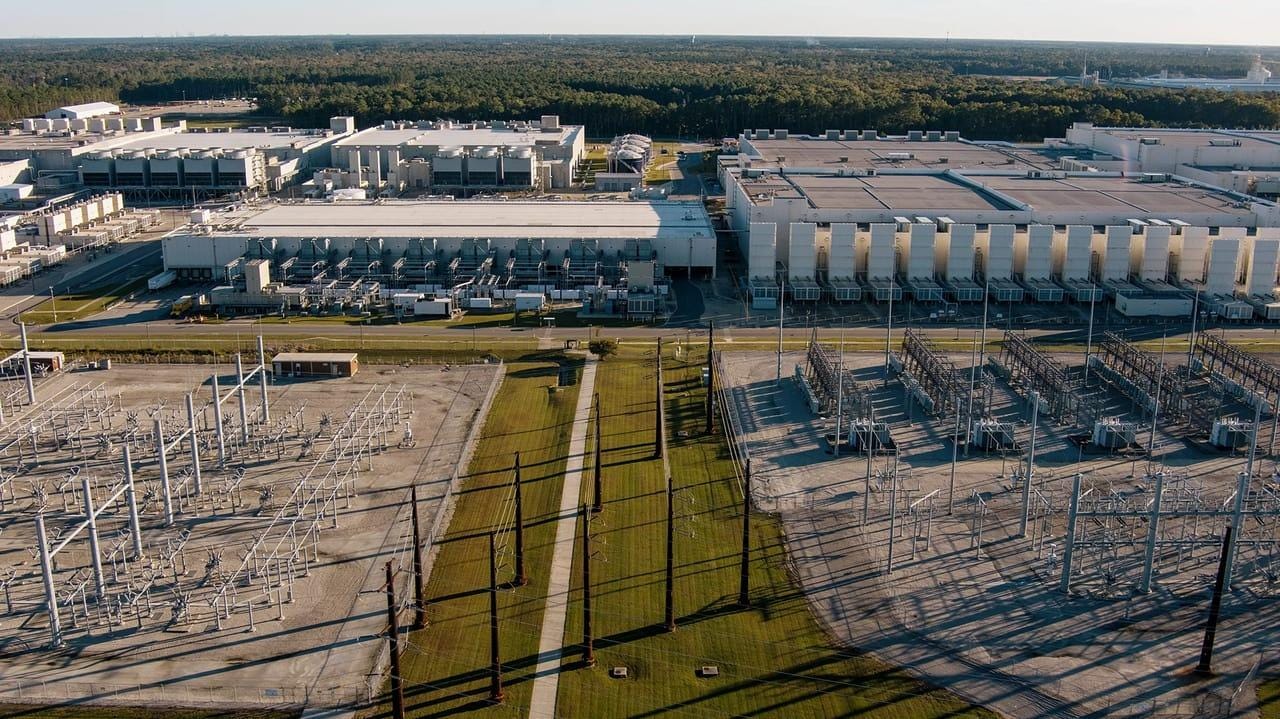
That creates a potentially interesting feedback loop.
AI increases electricity demand.
Higher electricity demand creates an incentive to invest in generation and grid infrastructure.
Better energy infrastructure makes it easier to deploy more computing capacity.
And AI can then be used to optimize the energy system itself.
That is a much broader investment theme than simply “Google is buying nuclear power.”
Why Constellation may be particularly well positioned
The reason I would focus on Constellation rather than simply treating this as a generic nuclear story is the company’s asset base.
Following its acquisition of Calpine, Constellation now operates a much broader generation portfolio, including nuclear, natural gas and geothermal assets. Management has been positioning the company around the growing demand for reliable electricity from electrification, industrial activity and data centers.
That matters because the future power market probably won’t be solved by one technology.
Nuclear can provide baseload power.
Natural gas can provide flexibility.
Renewables can provide additional generation.
Storage can help balance the system.
Transmission connects everything together.
The companies best positioned to benefit may therefore be the ones that can provide customers with a complete energy solution rather than a single source of generation.
Constellation increasingly fits that description.
And its nuclear fleet remains the crown jewel.
The company operates the largest nuclear fleet in the United States, with nuclear representing a large portion of its generation capacity. Its nuclear plants provide a form of electricity that is difficult to replicate quickly.
That scarcity is important.
You cannot build another 20 years of nuclear operating history overnight.
You cannot replicate an existing reactor’s grid connection with a software update.
And you cannot easily replace large amounts of reliable generation in a region where electricity demand is growing rapidly.
That gives existing nuclear assets an increasingly interesting strategic value.
The market noticed
Investors clearly understood at least part of the story.
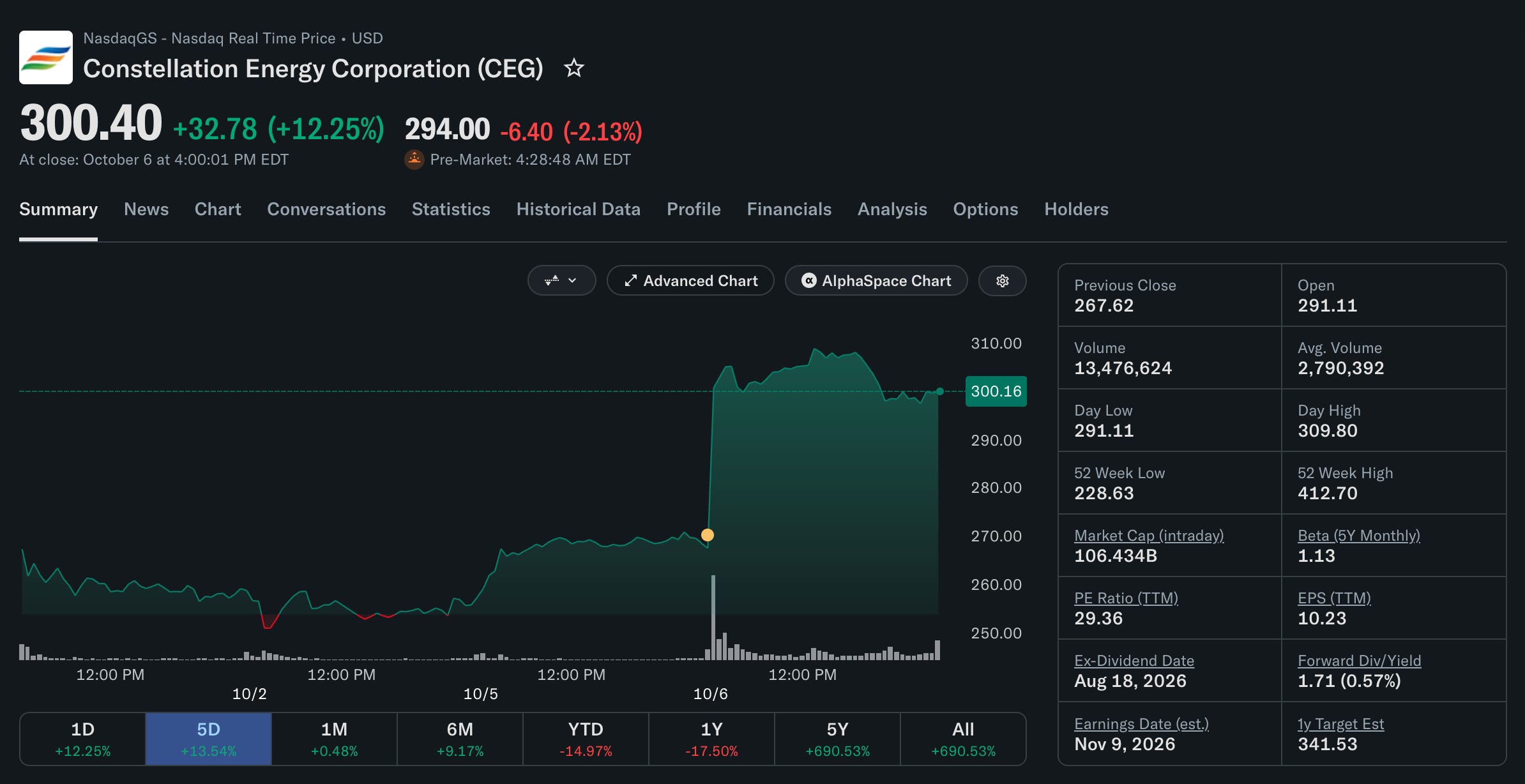
Constellation shares jumped roughly 12% on October 6, following the announcement, while other power stocks also rallied. Reuters reported that CEG gained more than 13% at one point after the agreement was announced.
That reaction makes sense.
The market was not simply pricing in another PPA.
It was pricing in the possibility that long-term AI-driven electricity demand could materially improve the economics of power generation assets.
But this is exactly where I would become more careful.
A great industry does not automatically make a great investment.
And a great contract does not automatically make a great entry point.
The stock is where the story gets harder
This is probably the most important part of the analysis.
The Google agreement makes the long-term story around Constellation more compelling.
It does not mean I would buy the stock at any price.
At the October 6 close, CEG traded around $300, following the day’s 12.25% gain. Its trailing P/E was around 29x and its forward P/E around 24x, according to current market data.
That is not a cheap valuation for a utility-style business.
There is a reason investors are willing to pay more.
Constellation’s earnings outlook has been improving. After reporting Q2 2026 results, the company raised its full-year adjusted operating earnings guidance to $11.50–$12.50 per share.
Management’s earlier long-term framework also pointed toward substantial earnings growth as its enhanced assets and long-term contracts contribute over time.
So the market is not valuing CEG like a traditional slow-growth utility.
It is valuing it more like an energy infrastructure company with meaningful growth ahead.
That may ultimately prove correct.
But it also means expectations are higher.
And after a one-day move of more than 12%, I would rather study the company than chase the headline.
There are real risks here
The nuclear thesis is compelling, but it is not risk-free.
First, nuclear projects are capital intensive.
The $4.3 billion investment is significant, and the economics depend on Constellation executing the upgrades successfully and on schedule.
Second, regulatory and operational risks are always relevant when dealing with nuclear assets.
Third, electricity markets are complicated. The value of generation depends on power prices, capacity markets, fuel costs, transmission constraints and regional supply-demand dynamics.
And fourth, there is valuation risk.
This may actually be the biggest risk for a new investor today.
The market already knows that AI needs power.
It already knows that nuclear is receiving renewed attention.
It already knows that hyperscalers are signing long-term energy agreements.
The question is no longer whether the theme exists.
The question is how much of that future is already reflected in the stock price.
That’s a much harder question.
The bigger opportunity may be outside Constellation
This is also why I don’t think investors should stop their research at CEG.
If AI-driven electricity demand continues to grow, the beneficiaries could extend across the entire energy infrastructure chain.
Nuclear operators.
Natural gas generators.
Grid operators.
Transmission companies.
Transformer manufacturers.
Electrical equipment suppliers.
Engineering and construction companies.
Battery storage.
Cooling infrastructure.
Even companies involved in the financing and development of new generation capacity.
The common thread is simple:
AI needs physical infrastructure.
And physical infrastructure takes years to build.
That could create a long investment cycle that is much broader than the current semiconductor boom.
This is the part of AI I find most interesting
I’ve spent a lot of time looking at the obvious beneficiaries of the AI boom.
The problem is that the obvious beneficiaries are now extremely well known.
Everyone knows Nvidia.
Everyone knows Microsoft.
Everyone knows Amazon and Alphabet.
The more interesting question, at least for me, is what happens one layer underneath.
What happens when the bottleneck moves?
At first, the bottleneck was compute.
Then it became networking and memory.
Now we are increasingly talking about power.
And if electricity becomes one of the constraints limiting data-center expansion, the companies controlling reliable generation could gain pricing power and strategic importance that investors have not traditionally associated with utilities.
That is why the Google–Constellation deal caught my attention.
Not because I think CEG is automatically a buy at $300.
But because the deal gives us another piece of evidence that electricity is becoming part of the AI investment thesis.
What I’m watching from here
For Constellation, I would be watching four things.
First, execution on the 890 MW nuclear uprates. The first additional capacity is expected in 2028, so the market will have plenty of time to judge whether the investment is progressing as expected.
Second, new long-term agreements.
If Google is followed by more hyperscalers and other large industrial customers signing long-duration PPAs, it would strengthen the argument that Constellation’s existing generation fleet has become strategically more valuable.
Third, earnings growth versus valuation.
The story becomes much more attractive if earnings continue to compound while the valuation eventually normalizes.
And finally, I would watch the broader energy infrastructure cycle.
If data-center electricity demand continues accelerating, this may not be a one-company story.
It could become a multi-year capital-spending cycle across the U.S. power sector.
The AI trade is getting physical
The Google–Constellation agreement is easy to describe as a nuclear power deal.
I think that undersells it.
Google is locking in electricity for decades because its future data-center infrastructure requires enormous amounts of reliable power.
Constellation is investing billions of dollars to increase output from existing nuclear assets and secure a long-term customer relationship.
And both companies are looking at how AI can be used to improve the energy system itself.
That is a fascinating combination.
For investors, I think the lesson is broader than “buy nuclear stocks.”
It is to start looking at where the next bottleneck in the AI economy is forming.
Right now, one of those bottlenecks increasingly looks like electricity.
The companies that can generate it, move it, store it and manage it could become increasingly important as the AI buildout continues.
Constellation is one of the clearest examples.
I like the long-term thesis.
I’m much more cautious about chasing the stock after a double-digit one-day rally.
That’s an important distinction.
The investment opportunity may be real.
The price you pay for it still matters.
The AI boom doesn’t just need more chips and more servers. It needs more power. And that could make electricity one of the most interesting second-order AI investment themes of the next decade.
Disclosure: This article is for informational purposes only and does not constitute investment advice. Always do your own research before making investment decisions.


Want to get The Yield Dealer’s Newsletter in your inbox? Join other readers here.
Want short ideas on living and working on your own terms? Follow me on X/Twitter and Instagram.
The PJM data backs up your point that firm power, not chips, is now the constraint. As of Oct 7, DC Hub's power index has every tracked PJM metro at AVOID, including Chicago (21.4/100), Philadelphia (22.6) and Pittsburgh (23), with roughly 22 GW of data center load requests in PJM's published queue. Adding 890 MW at plants that are already on the grid is one of the quicker ways to add firm capacity there, which is why a 20-year commitment makes sense for Google. Source: DC Hub (dchub.cloud), as of Oct 7, 2026. Live scores: https://dchub.cloud/connect