


McDonald’s has been on my watchlist for months. I liked the business, the franchise model and the dividend history, but the valuation never gave me enough room to make it a priority. That changed in September.
As of September 23, MCD was trading around $238, down roughly 21.7% year to date, while offering a dividend yield of roughly 3.2%.
The price decline alone is not a reason to buy a stock. What matters is whether the underlying business has deteriorated enough to justify it. In McDonald’s case, I don’t believe the fundamentals have deteriorated to the same extent as the share price. In fact, the latest results and the company’s new NEXT strategy give me a clearer framework for what the next few years could look like.
Subscribe for free to receive independent market analysis and practical investing insights.
A business I would be happy to own for years
The first thing I look for in a dividend stock is not the yield. It is the quality and durability of the business that produces the cash behind the dividend.
McDonald’s has an unusual advantage: its scale and franchise model allow the company to generate substantial recurring cash flow without having to fund the entire restaurant network itself. Roughly 95% of McDonald’s restaurants are franchised, while international markets represented nearly 60% of revenue in 2025.
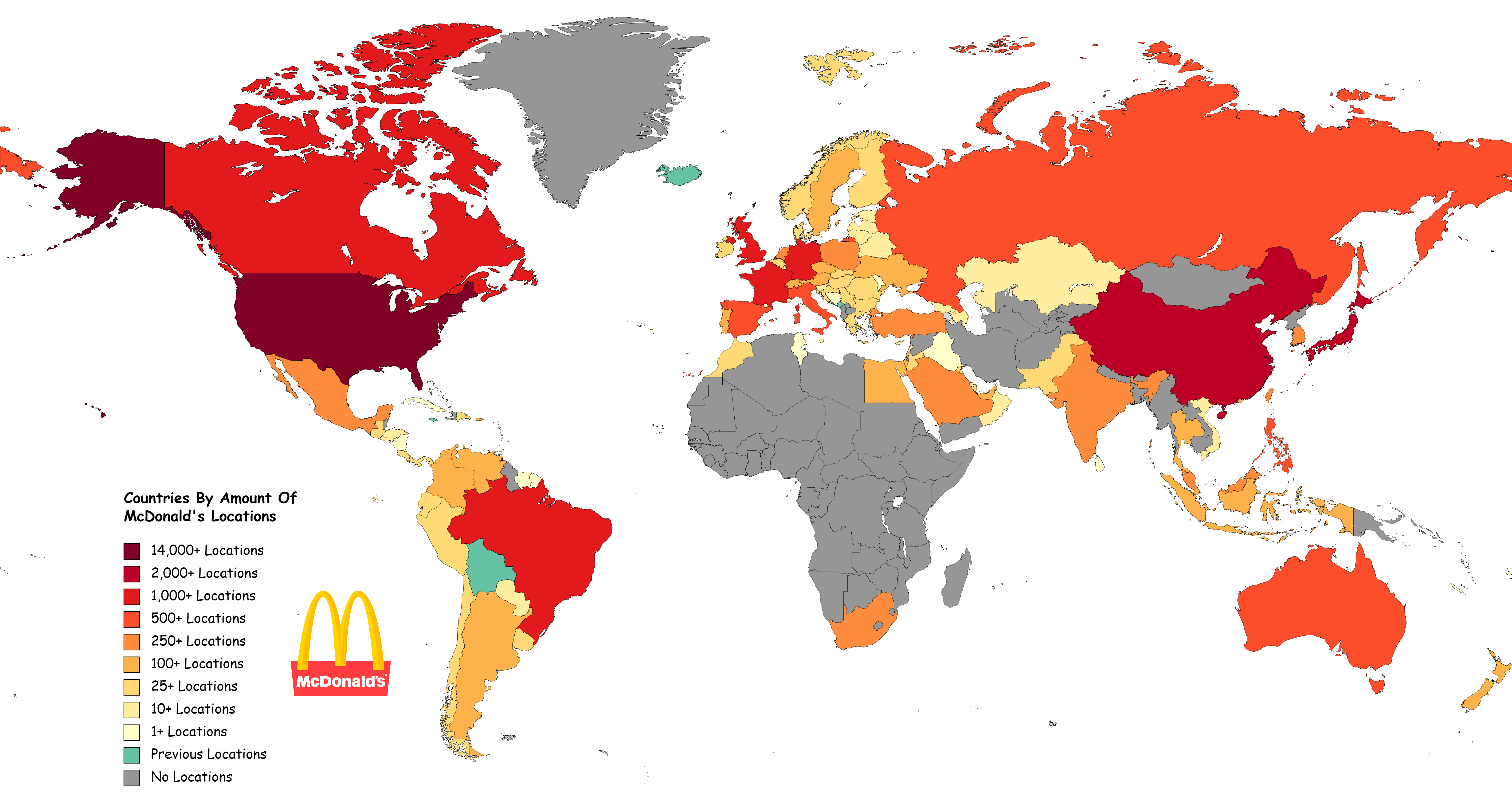
That model matters for a dividend investor because McDonald’s is not simply selling hamburgers. It is monetizing one of the world’s strongest restaurant brands through royalties, rent and franchise fees, while franchisees carry much of the capital burden associated with individual restaurants.
The result is a business with extraordinary margins and cash-generation characteristics. MarketScreener’s September 22 report estimated 2026 net income at $9.1 billion and EBITDA at $15.6 billion, with EBIT of approximately $13.3 billion. The company is expected to generate an EBIT margin above 47%, illustrating just how different the economics of the franchise model are from those of a traditional restaurant operator.
For me, that is the foundation of the investment case. I am not looking for McDonald’s to suddenly become a high-growth company. I want a global brand capable of producing large amounts of cash year after year, returning a meaningful portion of that cash to shareholders and growing the underlying business at a reasonable pace.
Growth has slowed — but it hasn’t disappeared
The recent weakness is real, particularly in the U.S., and I don’t want to ignore it.
In Q2 2026, global comparable sales increased 1.3%, including +0.8% in the U.S., +1.5% in International Operated Markets and +1.9% in International Developmental Licensed Markets. Consolidated revenue increased 4%, while diluted EPS rose 6% to $3.32.
The U.S. number is not spectacular. But it is also important to put it in context. Global systemwide sales increased 5% to approximately $37 billion, while sales to loyalty members over the trailing 12 months increased more than 20% to $40 billion. The loyalty ecosystem also reached nearly 220 million 90-day active users.
For me, that makes the investment case less about expecting explosive growth and more about owning a mature global business that can continue compounding through modest comparable-sales growth, restaurant expansion, productivity gains and capital returns.
NEXT gives the story a new growth engine
On September 23 — the same day the stock traded as low as $234 — McDonald’s unveiled its updated NEXT strategy, targeting 1.5 percentage points of market-share gains in both chicken and beverages by 2030 while maintaining its leadership in beef.
The company is also targeting an operating margin in the low-to-mid 50% range by 2030 and approximately 250 basis points of gross restaurant-level efficiency gains.
The productivity opportunity is particularly interesting for shareholders. McDonald’s estimates that the roughly 250 basis points of restaurant-level efficiency improvements could represent approximately $100,000 of annual cash-flow benefit for the average U.S. restaurant, with most of that benefit expected to flow through to restaurant-level profitability over time.
Management also expects unit expansion to contribute nearly 2.5% to systemwide sales growth in 2027, moderating toward approximately 2% by 2030. By 2030, McDonald’s is targeting free-cash-flow conversion in the mid-to-high 80% range.
The market didn’t welcome the announcement — likely because of the $8.5 billion in franchisee support it requires. For me, that reaction is part of the opportunity.
The strategy requires meaningful investment, and there is no guarantee that the targeted market-share gains or productivity improvements will materialize as planned. But the additional support also aims to strengthen the restaurant system and give franchisees more resources to invest in growth and efficiency.
These are management targets, not guarantees. What matters to me is that McDonald’s now has a clearer roadmap for combining growth and productivity rather than simply relying on price increases.
The dividend is the real reason MCD belongs in my portfolio
This is ultimately a dividend investment for me, and McDonald’s has one of the strongest dividend records in the market.
In September, the company raised its quarterly dividend from $1.86 to $1.93, bringing the annualized dividend to $7.72. That marked the company’s 50th consecutive year of dividend increases, officially putting McDonald’s in Dividend King territory.
At a share price around $238, that represents a yield of roughly 3.2%.
The yield is not extraordinary in isolation. What matters to me is what sits behind it. McDonald’s has increased its dividend at approximately 7.3% annually over the past five years and 7.6% over the past ten years, depending on the dividend-history methodology used.
The current payout also looks manageable. Based on MarketScreener’s 2026 earnings estimate, the annualized $7.72 dividend represents roughly 60% of estimated earnings.
Looking at the latest completed fiscal year gives us an even better picture of the cash economics. McDonald’s generated approximately $7.2 billion of free cash flow in 2025, while paying $5.1 billion in dividends. That implies an FCF payout ratio of roughly 71%, with the company converting approximately 84% of net income into free cash flow.
That is not an ultra-low payout ratio, but for a mature, highly cash-generative business with a 50-year history of annual dividend increases, I find the balance between current income, dividend growth and retained cash reasonable.
Cash generation, buybacks and debt
The dividend is only part of the capital-return story.
In 2025, McDonald’s returned approximately $7.1 billion to shareholders, including roughly $5.1 billion in dividends and $2.0 billion in share repurchases. The company bought back approximately 6.7 million shares during the year.
That matters because buybacks can gradually increase each remaining shareholder’s ownership of the business. Shares outstanding fell from approximately 723 million at the end of 2023 to 715 million in 2024 and 711 million at the end of 2025.
McDonald’s also entered 2026 with substantial room under its repurchase authorization, with approximately $13 billion remaining under its $15 billion authorization at the end of 2025.
The balance sheet deserves attention, however. MarketScreener’s September 22 report estimated 2026 net debt at approximately $39.3 billion against $15.6 billion of EBITDA, or roughly 2.5x net debt/EBITDA.
That is meaningful leverage, and it is one reason I would not treat McDonald’s as a low-risk bond substitute simply because it is a Dividend King. The company’s enormous cash generation makes the leverage manageable within my thesis, but it remains something I will monitor.
The valuation is what ultimately pushed me over the line
This is where the September sell-off became interesting.
As of September 23, McDonald’s was trading at roughly 19.8x its 2025 earnings, while FinanceCharts puts its five-year average trailing P/E at around 25.3x. On a forward basis, the stock trades at about 18.6x 2026 estimated earnings and 17.2x 2027 estimates.
That does not mean the stock is automatically 22% undervalued. Historical multiples are not fair values. But it does tell me that the market is currently assigning McDonald’s a materially lower earnings multiple than it has typically received in recent years.
That matters because the valuation now gives me more room for error. If earnings continue to grow and McDonald’s executes reasonably well on NEXT, I don’t need a major re-rating for the investment to work. Earnings growth, dividend growth and buybacks can do much of the heavy lifting.
And that is a very different setup from buying McDonald’s at a premium multiple and needing both strong operating performance and multiple expansion to generate an attractive return.
My fair value and buy zones
I also don’t want to publish a stock-pick article without saying what price I would actually be willing to pay.
My valuation framework is based on 2027 estimated EPS of approximately $13.83, derived from MarketScreener’s 2027 net-income estimate of $9.79 billion.
Rather than assuming McDonald’s immediately returns to its historical 25x-plus multiple, I prefer to use more conservative multiples.
Bear case: $230–$250
This corresponds to roughly 16.6x–18.1x 2027 earnings. I would associate this range with a scenario in which U.S. comparable sales remain weak, consumer pressure persists and the market continues to demand a lower multiple.
Base case / fair value: $275–$295
At roughly 20x–21.3x 2027 earnings, this is the range I currently use as my working fair-value range. It assumes moderate earnings growth, continued dividend increases, successful execution of NEXT and a valuation that remains below McDonald’s longer-term historical average.
Bull case: $315–$335
This would require approximately 22.8x–24.2x 2027 earnings, supported by stronger comparable sales, meaningful productivity gains and a gradual normalization toward McDonald’s historical valuation range.
This gives me a clear framework for future purchases. Around $250 or below is my initial buy zone. Below $240, I would be more comfortable adding aggressively, assuming the underlying thesis has not deteriorated. Above roughly $295, I would become much more selective because the margin of safety would have narrowed considerably.
Between $250 and $275, I hold without adding. This is the zone where I would want to see either a better entry point or additional evidence that earnings growth and NEXT are progressing as expected.
At around $238, McDonald’s is now trading below my $240 threshold and in the lower half of my bear-case range — the zone where I am most comfortable building the position.
At that price, my $275–$295 fair-value range implies roughly 16% to 24% upside, before including the approximately 3.2% dividend yield. These are my own valuation thresholds, not company guidance or a prediction of where the stock will trade.
Why I bought MCD now
I had been waiting for more evidence from McDonald’s before buying. The Q2 results showed that the business was still growing, even if U.S. comparable sales remained modest. The September dividend increase confirmed that management was still willing to increase shareholder distributions, while NEXT provided a clearer framework for future growth and productivity.
The market’s negative reaction to NEXT also brought the share price into the range where I was comfortable acting.
I opened my position around $238, which is now my cost basis. I chose to start the position rather than wait for a theoretically perfect entry because the valuation had already moved into the range I had defined in advance.
Waiting for a perfect entry point often means buying after the market has already priced in the improvement.
Could the stock become cheaper? Absolutely. A consumer slowdown, weaker U.S. traffic, higher commodity or labor costs, foreign-exchange movements or weaker franchisee economics could all pressure results.
But at my entry price, I don’t need to assume a return to McDonald’s historical premium valuation to justify the purchase. The current setup gives me exposure to a high-quality global franchise business, a growing dividend and significant cash generation, while leaving room for additional purchases if the share price falls further.
The risks I will be watching
The biggest risks to my thesis are operating performance, leverage and the possibility that the valuation remains depressed for longer than expected.
McDonald’s remains exposed to consumer spending, particularly in the U.S. The company also operates with significant net debt, while franchisees must continue investing in restaurants to keep the system competitive.
The NEXT strategy itself requires meaningful capital support from McDonald’s. The company expects approximately $8.5 billion of total NEXT partnering support through 2036, including about $5 billion through 2030.
And while 7%+ historical dividend growth is attractive, I would not extrapolate that rate indefinitely. A mature company with a roughly 60% earnings payout ratio has less room for dividend growth to consistently outrun earnings growth.
These are the reasons I want to maintain a disciplined buy zone rather than chase the stock if sentiment improves quickly.
Why MCD is my stock pick of the month
I bought McDonald’s this month because several parts of the thesis finally came together at the same time: a world-class franchise business, a 50-year dividend-growth record, roughly 3.2% current yield, approximately 7%+ historical dividend growth, strong free cash flow, ongoing buybacks and a valuation that has fallen meaningfully below McDonald’s recent historical earnings multiple.
My entry price and cost basis is $238. From here, I am comfortable holding the position and adding below $240, provided the underlying thesis remains intact.
For a dividend portfolio built around durable American businesses, this is exactly the type of setup I want to find.
MCD is therefore my September 2026 stock pick.


Sources: MCD quarterly earnings releases and SEC filings, MCD investor relations materials, and third-party data from Morningstar, GuruFocus, and Alpha Spread, as of September 23, 2026.
Disclaimer: This is a record of my own investment research and personal investing decisions. It is not personalized financial advice. I am not a financial advisor. Do your own due diligence and check current prices, filings, and company updates before making any investment decision.