


September has arrived, and for many investors, the instinct is to “buckle up” rather than “buy in.”
I understand why.
Historically, September has been the weakest month for the stock market. Since 1950, the S&P 500 has averaged a decline of roughly 0.6% during the month, making it one of only two months of the year with an average negative return. More importantly, September is the only month with a historical positivity rate below 50%.
So yes.
The September effect is real.
But I think investors often draw the wrong conclusion from it.
Seasonality can tell us about historical tendencies. It cannot tell us what the market will do this September, and it certainly shouldn’t dictate whether I buy or sell a great business.
If anything, I think September is a good reminder to have a playbook ready.
Because if volatility comes back, I don’t want to be the investor trying to figure out what to buy after the market has already fallen.
I want to know what I want to own before it happens.
Subscribe for free to receive independent market analysis and practical investing insights.
The September Effect Is Real - But It’s Not Magic
There’s a reason September has historically been difficult for stocks, and it has very little to do with superstition.
As summer comes to an end, trading volumes normalize. Institutional investors return from vacation, fund managers begin repositioning their portfolios, and investors start looking more closely at how they want to finish the year.
There is also another important factor: tax-loss harvesting.
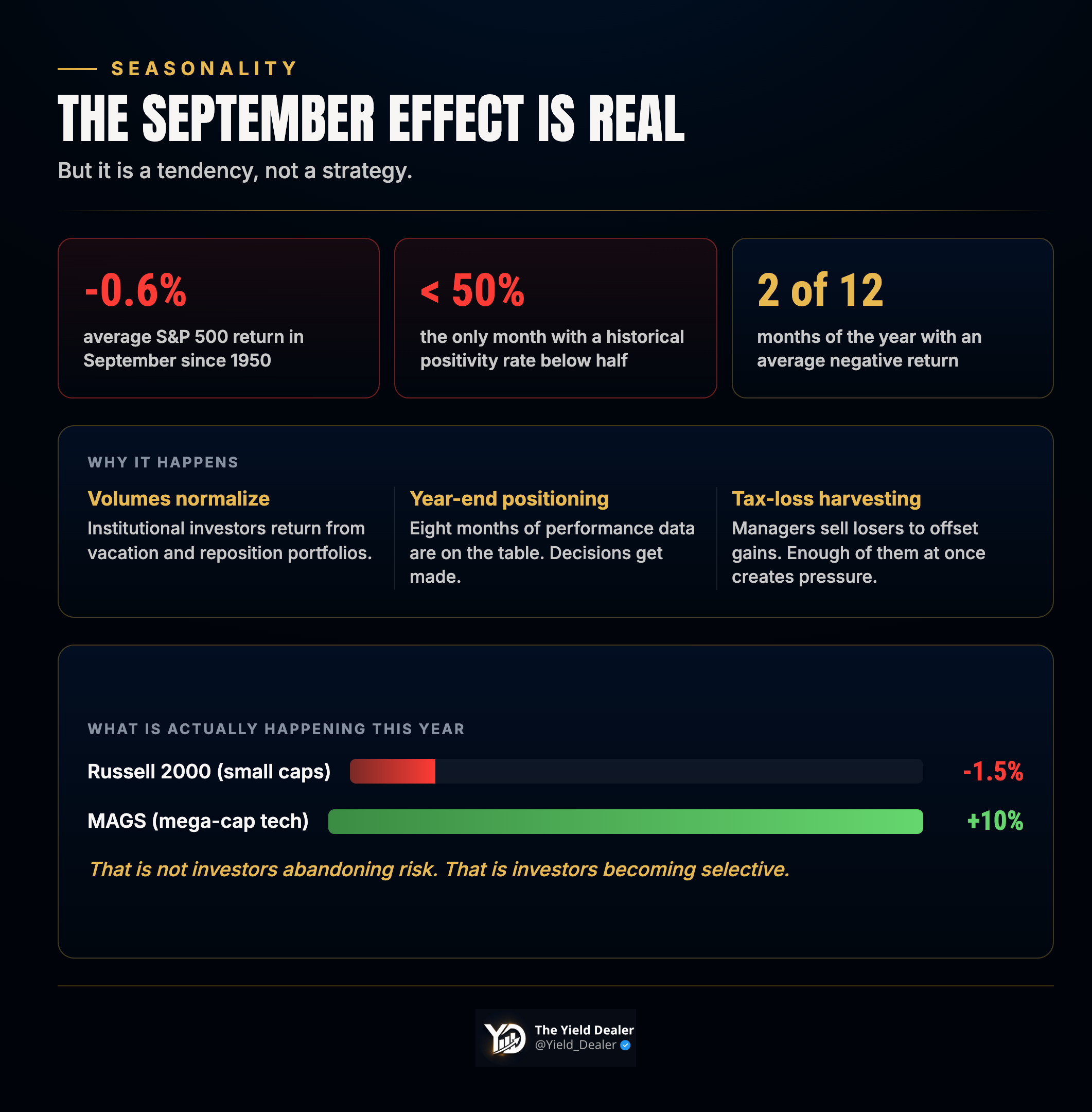
By September, money managers have accumulated eight months of performance data. Some begin selling losing positions to offset realized gains elsewhere in their portfolios. When enough investors make similar decisions at the same time, selling pressure can increase.
That helps explain why September can be uncomfortable.
But it doesn’t make the month predictable.
And that distinction is important.
Historical seasonality tells me that September has been weak in the past. It doesn’t tell me that selling everything on September 1st is a good investment strategy.
In fact, we are already seeing something interesting this year.
Small caps have struggled recently, with the Russell 2000 down roughly 1.5%. At the same time, money has been flowing back toward the largest technology companies, with the MAGS ETF gaining roughly 10% over the last month.
To me, that doesn’t look like investors completely abandoning risk.
It looks more like investors becoming selective.
They may be nervous about the broader market, but they are still willing to own businesses with strong cash flows, dominant market positions and proven earnings power.
As I like to say:
Seasonality is a tendency, not a strategy.
The S&P 500 entered September up nearly 13%, but that doesn’t mean every part of the market looks equally attractive.
Sometimes the index tells you one story.
Individual businesses tell you another.
Nvidia Isn’t Just a Stock Anymore
If I had to choose one company to watch as a health check for the AI boom, it would be Nvidia.
Not because I think NVDA can only go higher.
It obviously can’t.
But because Nvidia has become so deeply embedded in the AI infrastructure buildout that its earnings are increasingly telling us something about the health of the entire ecosystem.
The latest numbers were hard to ignore.
Nvidia reported $96.2 billion in revenue, more than double its revenue from the previous year. Data center revenue surged 117%.
Then came the forward guidance.
Approximately $108 billion in revenue for the next quarter.
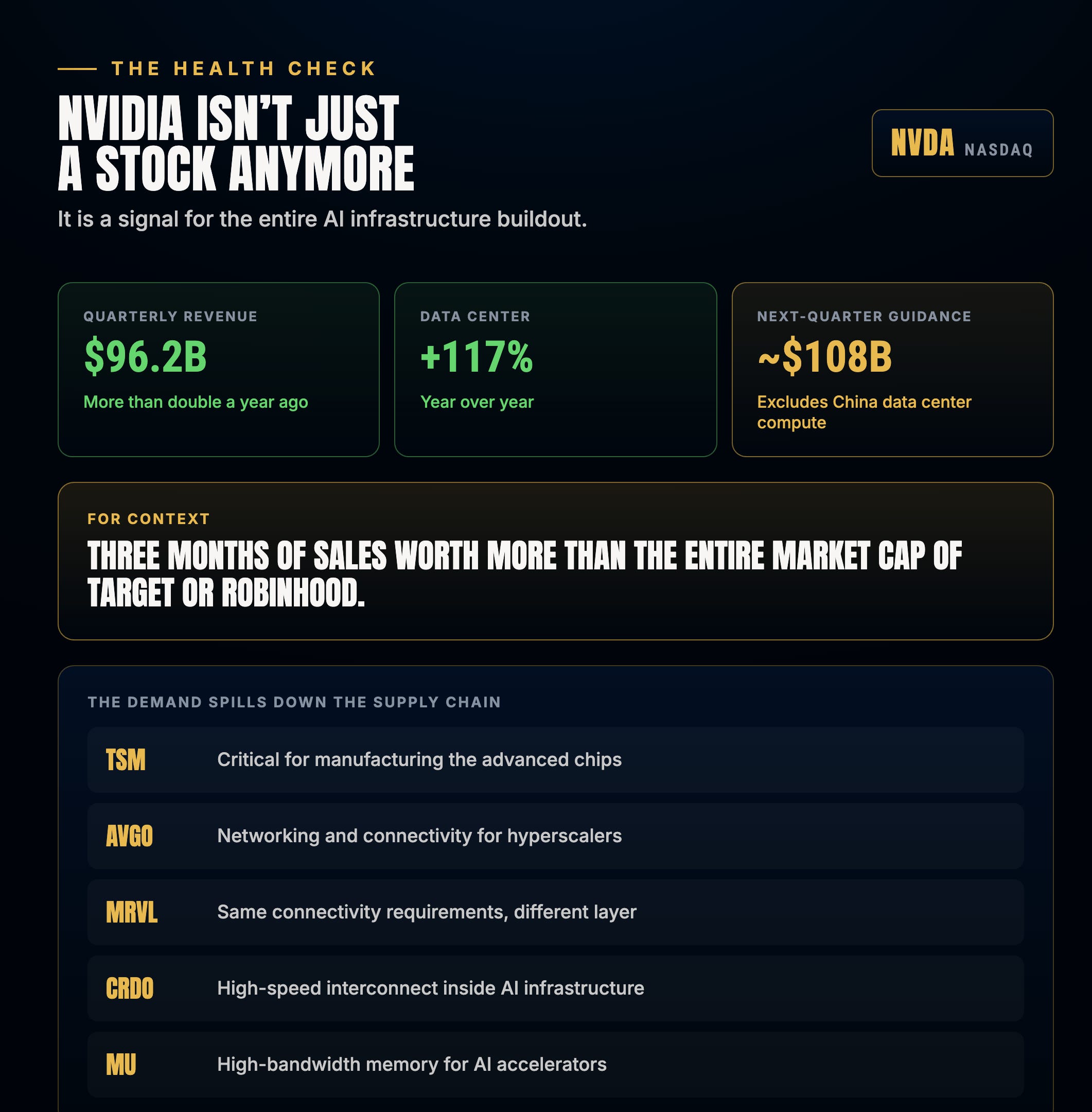
I think that number deserves some context.
Nvidia is projecting three months of sales greater than the entire market capitalization of companies such as Target or Robinhood.
And perhaps even more interestingly, that guidance excludes data center compute revenue from China.
So when I look at Nvidia today, I don’t just see a semiconductor company.
I see a signal.
The AI infrastructure thesis still appears to be running at full speed.
And Nvidia is only one part of that story.
The AI buildout creates demand across an entire supply chain.
Taiwan Semiconductor is critical for manufacturing the advanced chips.
Broadcom, Marvell and Credo benefit from the enormous networking and connectivity requirements created by hyperscalers and AI infrastructure.
Micron is exposed to the growing demand for high-bandwidth memory, which is becoming increasingly important as AI accelerators require more and more memory capacity.
That’s why Nvidia’s earnings matter beyond Nvidia itself.
If the AI infrastructure cycle were beginning to slow materially, I would expect to see it somewhere in the numbers.
Right now, I don’t.
That doesn’t mean technology stocks won’t be volatile in September.
They probably will be.
But volatility and deteriorating fundamentals are two very different things.
The Economy Is Creating a Problem for the Fed
Then we get to the economy.
And this is where things become much less straightforward.
The Federal Reserve is essentially being pulled in two different directions.
On one side, inflation remains stubborn.
PCE inflation, the Fed’s preferred measure, is sitting at 3.7%.
That’s still well above the 2% target.
So the idea that the Fed can simply declare victory and aggressively cut rates isn’t supported by the data.
Higher for longer remains a possibility.
Even another hike cannot be completely ruled out.
That’s the bad news.
But then you look at underlying demand.
Real final sales to private domestic purchasers grew at 4.2%, the strongest reading since Q1 2023.
That is not what a collapsing economy looks like.
It suggests that consumers and businesses are still spending.
Then there is the labor market.
Weekly jobless claims recently came in at 203,000.
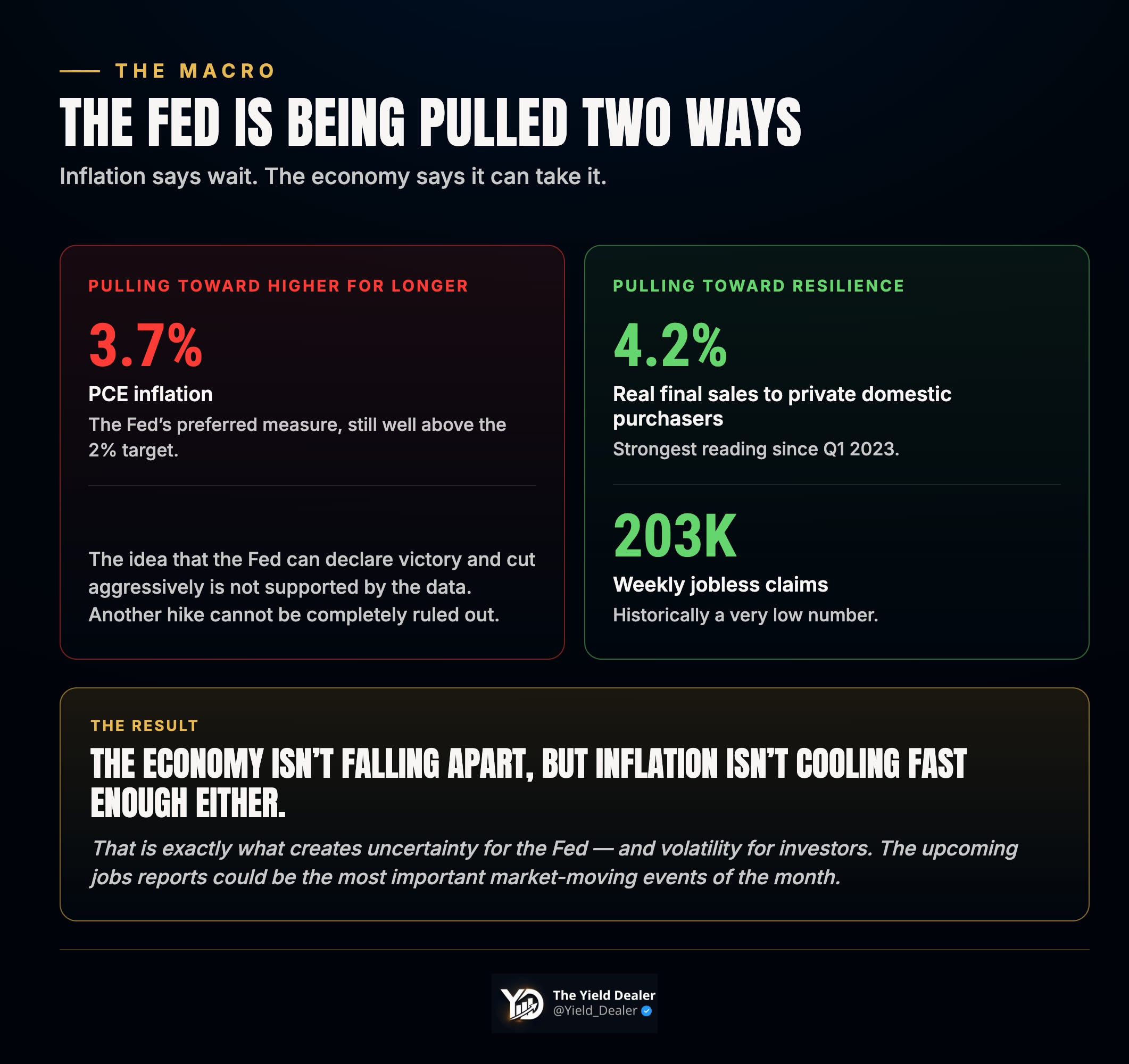
Historically, that’s a very low number.
So we have a strange combination.
Inflation is still too high.
Demand remains strong.
The labor market remains resilient.
The economy isn’t falling apart, but inflation isn’t cooling quickly enough either.
And that’s precisely what creates uncertainty for the Fed — and volatility for investors.
This is why the upcoming jobs reports could become some of the most important market-moving events of the month.
But again, I don’t think uncertainty means I should stop investing.
It means I should be more selective about what I buy.
My September Watchlist
This is where the theory becomes more interesting.
I don’t want to buy stocks simply because they have fallen.
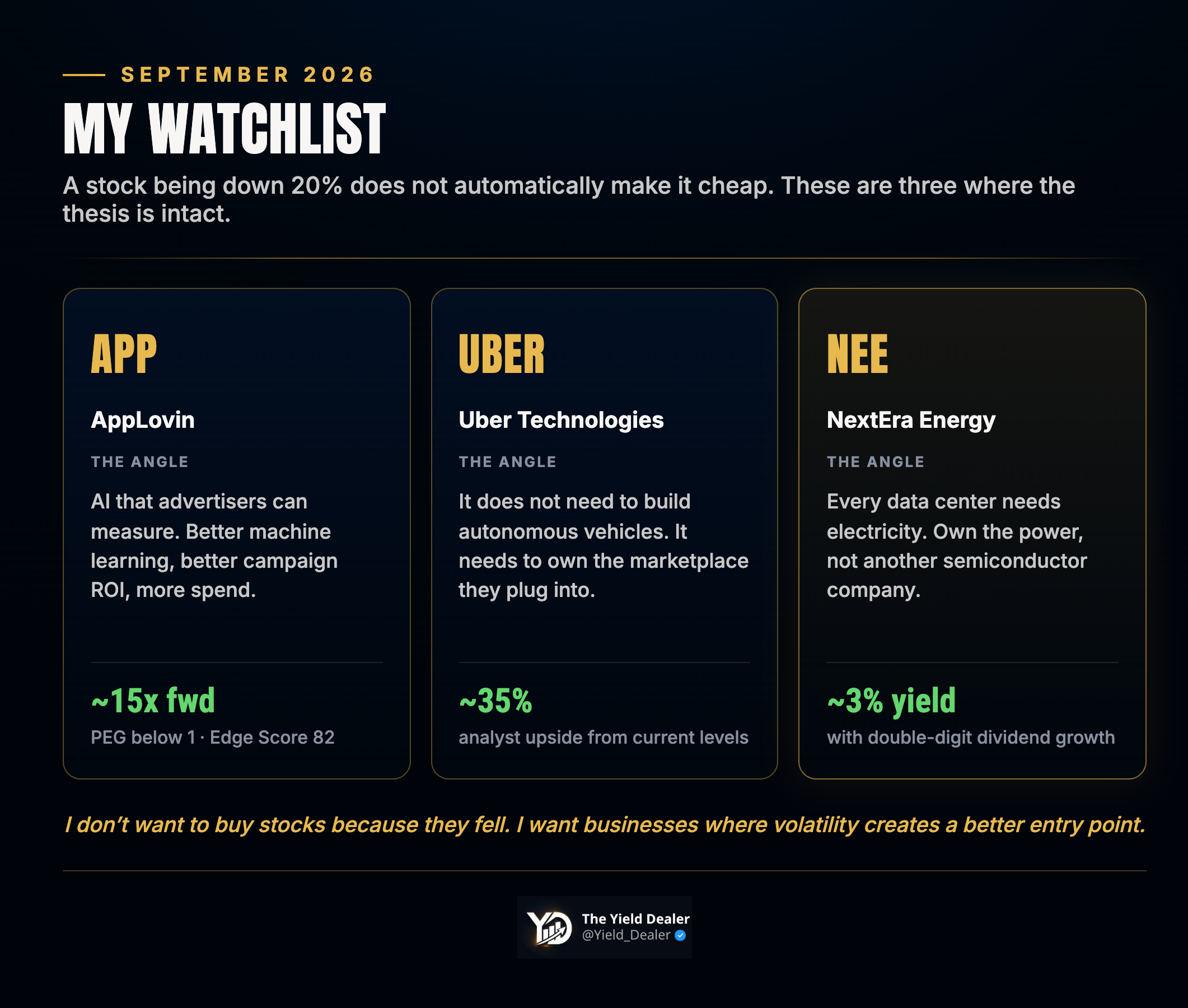
A stock being down 20% doesn’t automatically make it cheap.
What I want to find are businesses where the underlying thesis remains intact, but where market volatility could create a more attractive entry point.
For September, these are three names that stand out to me.
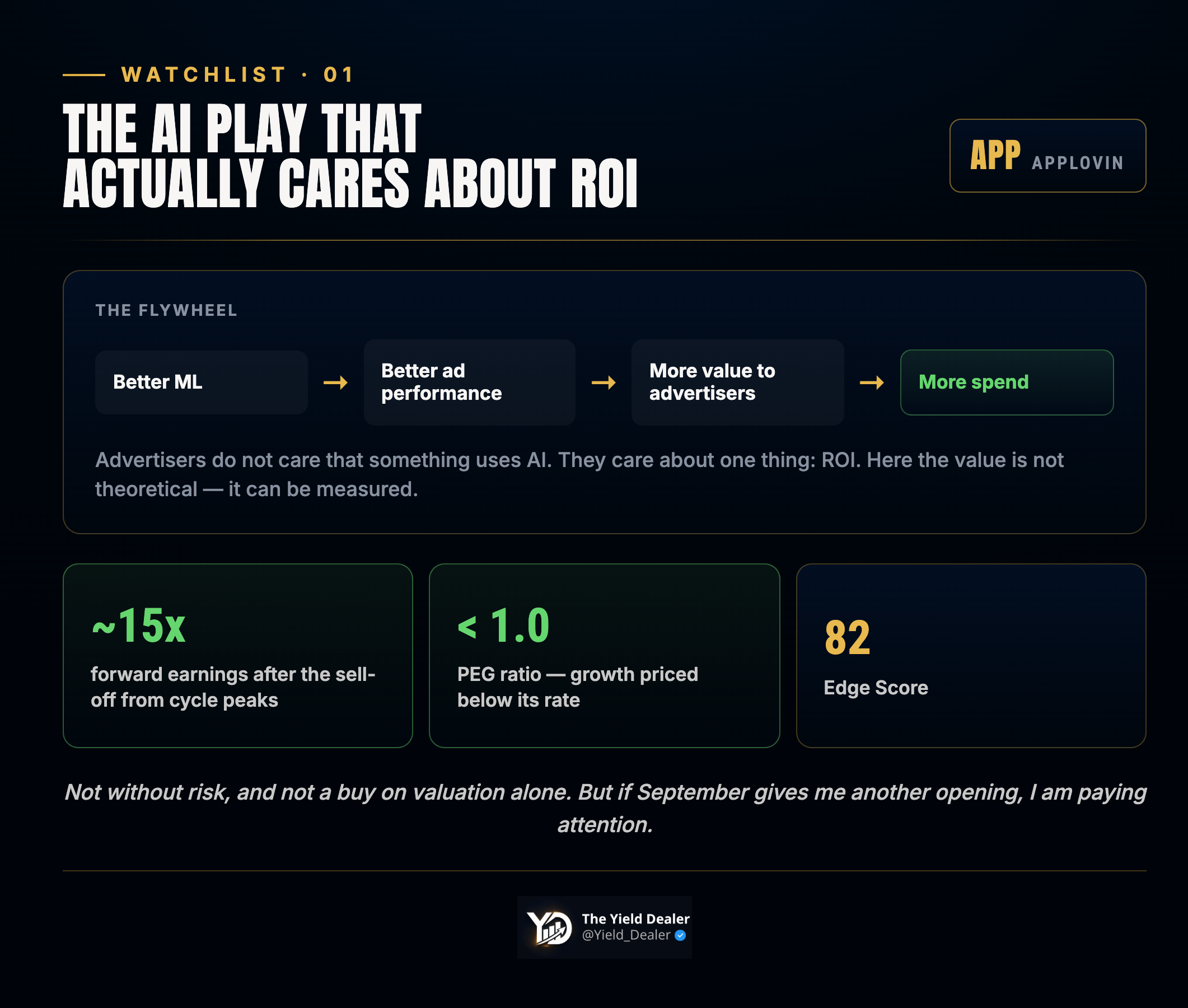
AppLovin (APP): The AI Play That Actually Cares About ROI
AppLovin is one of my favorite examples of how the AI story can be much more practical than the headlines suggest.
The company operates an AI-driven advertising platform, using machine learning to help advertisers improve the performance of their campaigns.
And as a content creator, there is something about that business model that I really like.
Advertisers don’t care that something uses AI.
They care about one thing:
ROI.
If AppLovin’s technology helps an advertiser generate a better return, that advertiser has a reason to spend more money.
It’s a very simple economic relationship.
Better machine learning leads to better advertising performance. Better performance creates more value for advertisers. More value can lead to more spending.
That’s the kind of AI application I find particularly interesting because the value isn’t theoretical.
It can be measured.
Following a significant sell-off from its previous cycle peaks, APP now trades at roughly 15x forward earnings, with a PEG ratio below 1.
The company also carries a strong Edge Score of 82.
Of course, AppLovin isn’t without risk, and I wouldn’t buy it simply because the valuation looks attractive.
But if September creates another opportunity to buy a company whose technology directly improves its customers’ economics, I’ll be paying attention.
Uber (UBER): The Marketplace Behind the Autonomous Vehicle Revolution
Uber is another company where I think the narrative has changed dramatically.
For years, the debate was largely about whether Uber could become consistently profitable.
Today, that question feels much less interesting to me.
The bigger question is what Uber becomes if autonomous vehicles eventually scale.
And this is where the company could have a very powerful position.
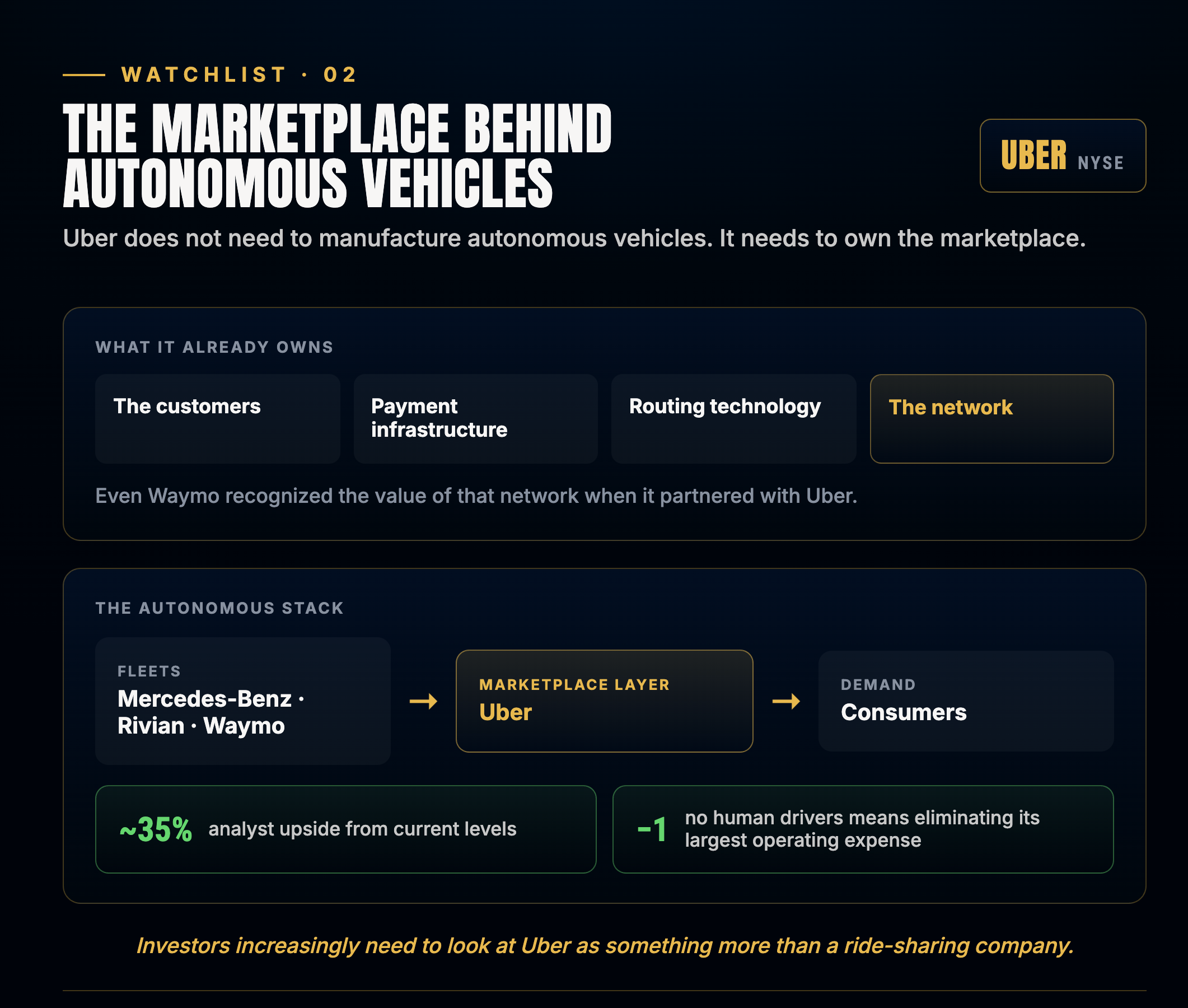
Uber doesn’t need to manufacture autonomous vehicles.
It needs to own the marketplace.
It already has the customers.
It has the payment infrastructure.
It has the routing technology.
And, perhaps most importantly, it has the network connecting supply and demand.
Even Waymo recognized the value of that network when it partnered with Uber.
Think about what that could mean in an autonomous future.
Companies such as Mercedes-Benz and Rivian could provide autonomous fleets.
Uber could provide the marketplace connecting those vehicles with consumers.
And if the vehicles no longer require human drivers, Uber could potentially eliminate its largest operating expense.
That’s a pretty meaningful change to the economics of the business.
Of course, autonomous vehicles won’t transform Uber’s business overnight, and there are plenty of regulatory and technological risks along the way.
But I think investors increasingly need to look at Uber as something more than a ride-sharing company.
It could become the marketplace layer sitting between autonomous fleets and consumers.
Analysts currently see roughly 35% upside from current levels.
I wouldn’t base an investment decision on that price target alone.
What interests me is the possibility of a fundamentally different business model emerging over time.
NextEra Energy (NEE): My AI Power Play
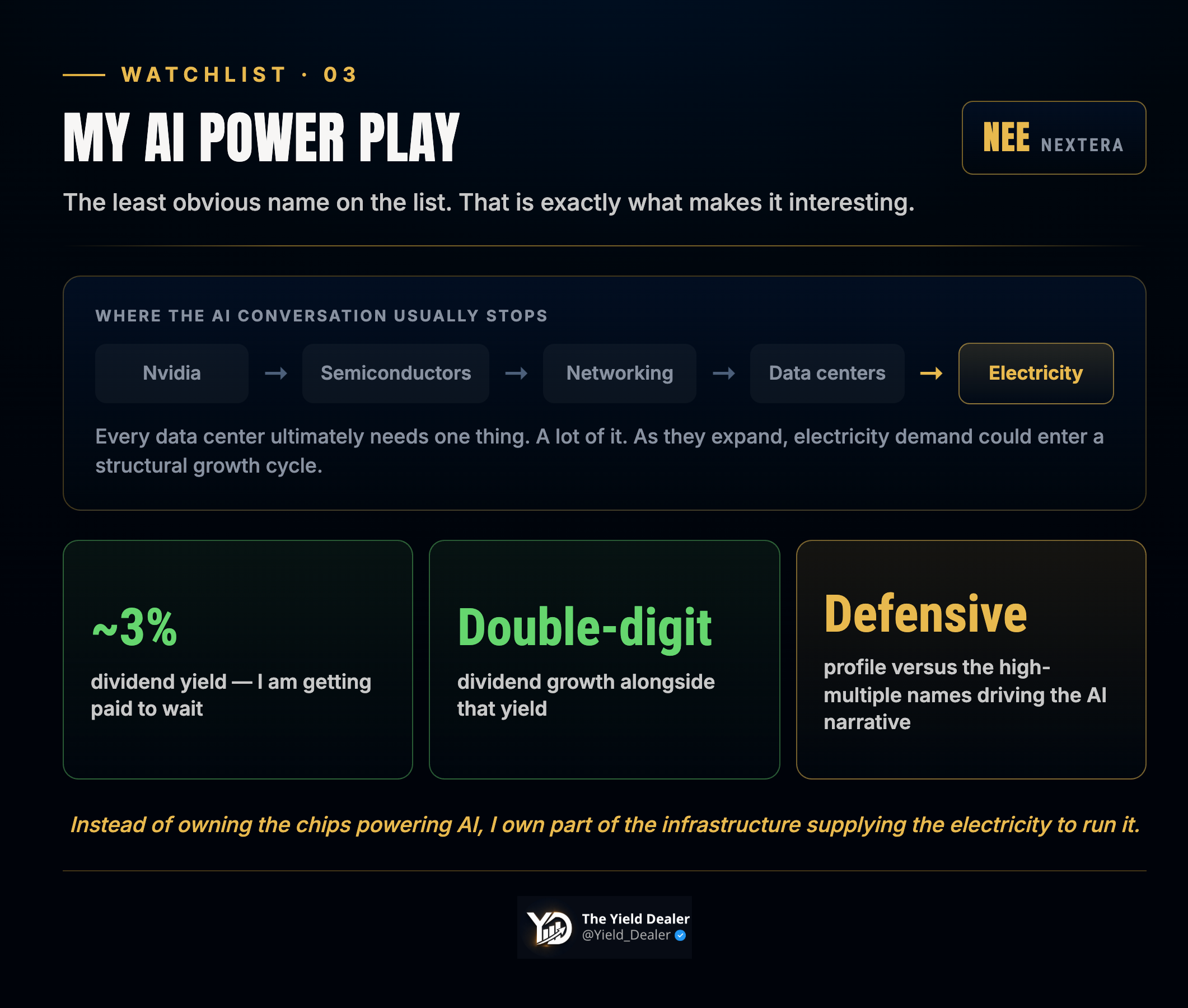
NextEra Energy might be the least obvious company on this list.
And that’s exactly what makes it interesting.
When investors talk about the AI boom, the conversation usually starts with Nvidia, moves to semiconductors, then networking and data centers.
But there is one thing every data center ultimately needs.
Electricity.
A lot of it.
As data centers continue to expand, electricity demand could enter a structural growth cycle. That creates an interesting opportunity for companies positioned on the other side of the AI infrastructure equation.
This is why I like NextEra Energy.
It gives me exposure to the AI trend without requiring me to buy another semiconductor company.
Instead of owning the chips powering AI, I can own part of the infrastructure supplying the electricity required to run it.
And I’m getting paid to wait.
NextEra offers roughly a 3% dividend yield alongside double-digit dividend growth, giving the stock a much more defensive profile than many of the high-multiple technology names currently driving the AI narrative.
If investors rotate away from expensive technology stocks during a volatile September, I would rather have a company that can benefit from rising electricity demand while continuing to grow its dividend.
It’s a different way to play the same trend.
And sometimes, that’s exactly what diversification is supposed to look like.
The Bigger Opportunity Is the Volatility
September may live up to its reputation.
The S&P 500 could decline.
Technology stocks could sell off.
Investors could suddenly become much more concerned about inflation, interest rates or the next jobs report.
I have no idea.
And that’s exactly the point.
I don’t want my investment strategy to depend on correctly predicting what the market will do over the next 30 days.
I want to own businesses that I believe can compound over the next 5, 10 or 20 years.
If the market gives me a better price along the way, even better.
That’s how I think about September.
Not as a month to fear.
As a month to prepare for.
The fundamentals I’m watching are still encouraging. AI infrastructure demand remains exceptionally strong. Private-sector demand is resilient. The labor market remains solid.
The biggest problem is inflation.
That creates uncertainty.
And uncertainty creates volatility.
But volatility isn’t necessarily the enemy of a long-term investor.
Sometimes, it’s the opportunity.
The objective isn’t to sell everything because September has historically been a bad month.
It’s to know what you want to own if September gives you a discount.
Personally, I’d rather spend the month building a shopping list than building an exit strategy.
Because successful investing isn’t about predicting every market move.
It’s about being prepared when the market gives you an opportunity.
And if September does exactly that?
I’ll be buying.


Want to get The Yield Dealer’s Newsletter in your inbox? Join other readers here.
Want short ideas on living and working on your own terms? Follow me on X/Twitter and Instagram.